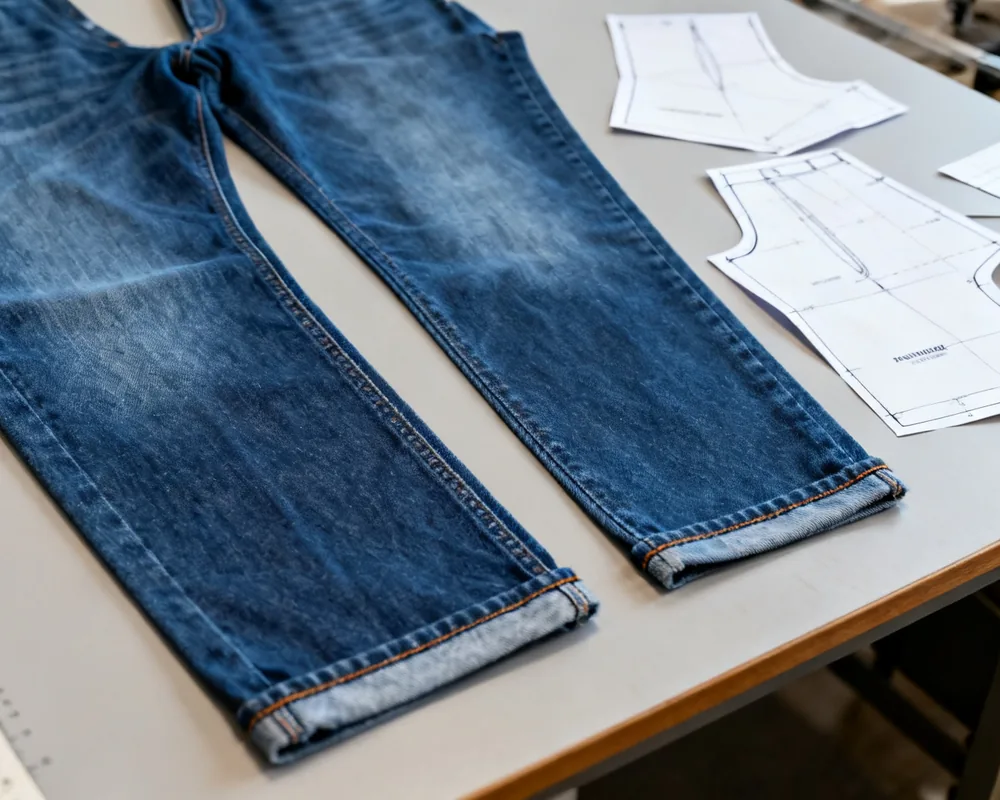
Five-pocket jean cutting
Shade band and usable width decide how many panels stay inside one lot before the pattern is locked. A marker that needs 140 cm of cuttable width cannot use a 128 cm usable width, even when both cloths sit near 407 g/m².
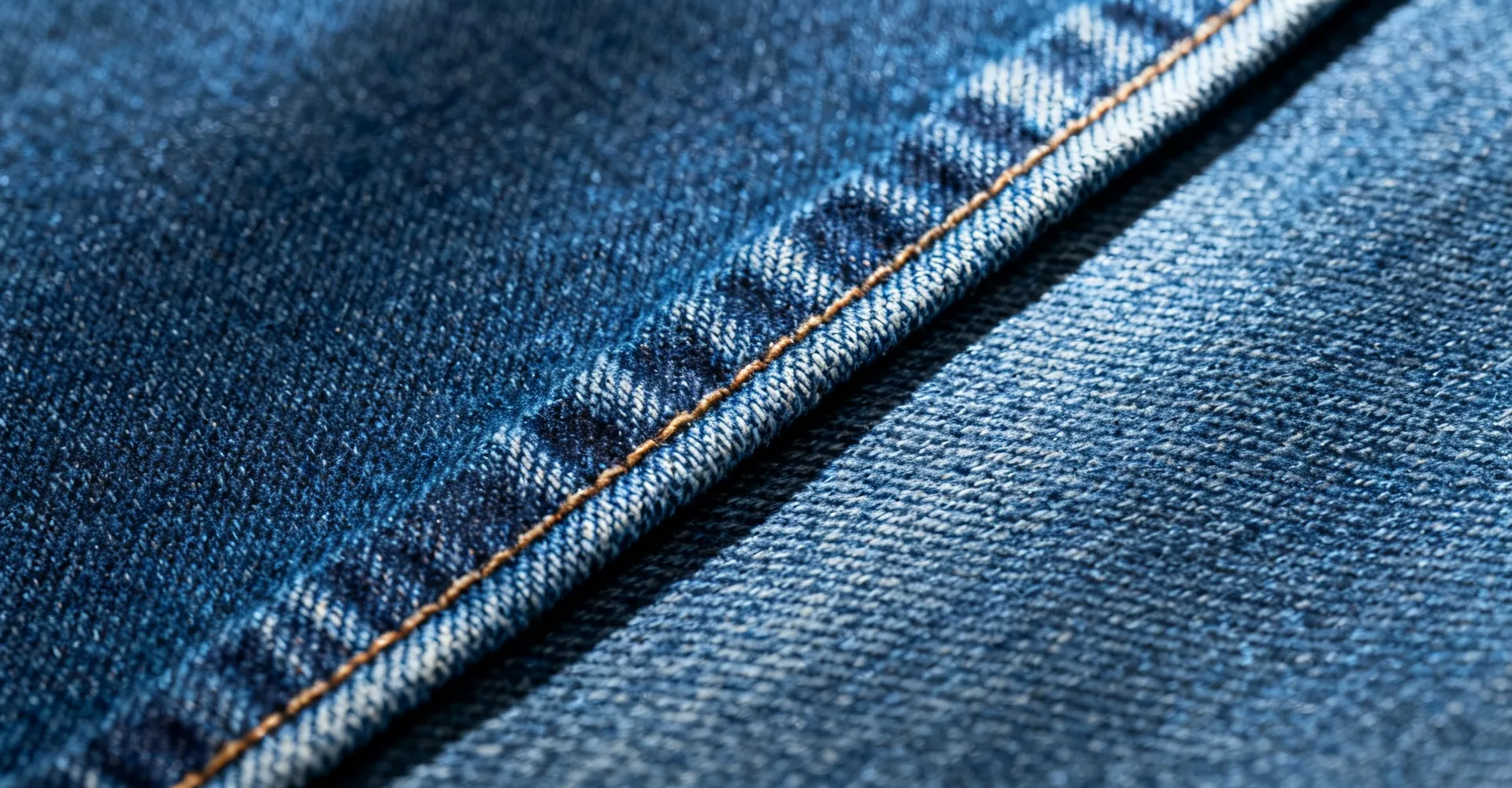
Selvedge denim. Edge. Next step.
Composition · GSM · Usable width · Finish
| Material family | Review first | Next step |
|---|---|---|
| Selvedge apparel denim | Fiber composition, twill direction and usable width inside the self-edge | Browse scope |
| Rigid or stretch construction | Warp and weft yarn count, elastane share if any, and the finish named on the reference | Discuss suitability |
| Field | Target question | Evidence question |
|---|---|---|
| Composition | Cotton, other fibers, and any elastane share as percent by mass. A buyer example is 100% cotton, or 98% cotton with 2% elastane. That split is a brief template, not a Kaihara lot result. | Which declaration or specimen covers this cloth? |
| GSM | Target mass per square metre and the tolerance you can cut against. 12 oz/yd² is about 407 g/m². A buyer may also write ±5% around that target. | Was the specimen conditioned, and which method was used? ISO 139 uses 20 °C and 65% relative humidity. |
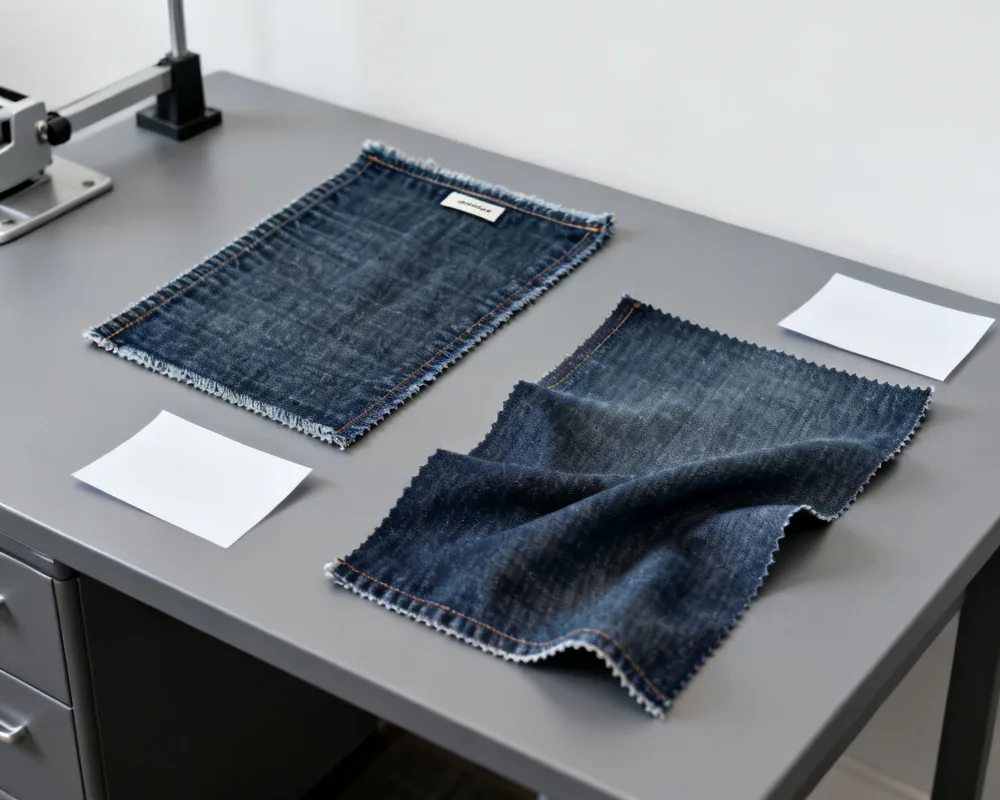
| Usable width | Cuttable width inside the selvedge, separate from full cloth width. An illustration is 78 cm usable inside an 82 cm edge-to-edge cloth. Those centimetres are not a measured Kaihara roll. | Is the figure a roll agreement or a single swatch? |
| Finish | Wash-down, skew control or surface treatment named on the reference. A buyer may write residual skew of 3% after one 40 °C wash. That percentage is the buyer's limit, not a published Kaihara result. | Does the sample state match the cloth you want to approve? |
Shade band and usable width decide how many panels stay inside one lot before the pattern is locked. A marker that needs 140 cm of cuttable width cannot use a 128 cm usable width, even when both cloths sit near 407 g/m².
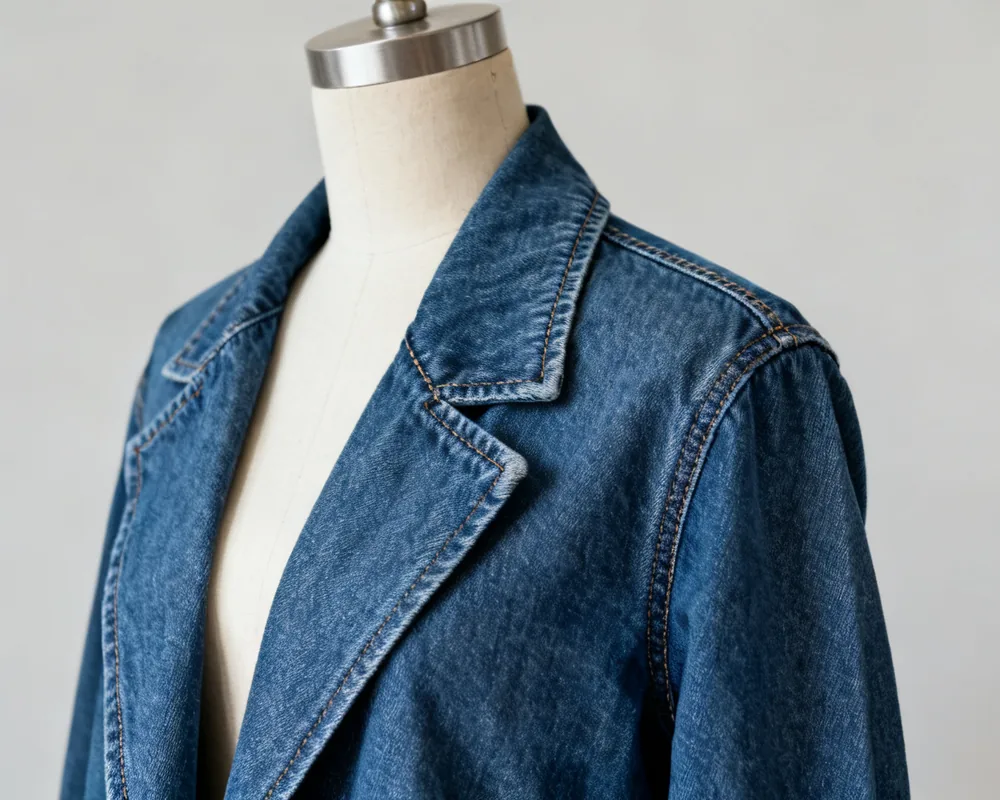
A heavier warp can hold a jacket yoke while the same GSM on a looser weft feels different at the sleeve.
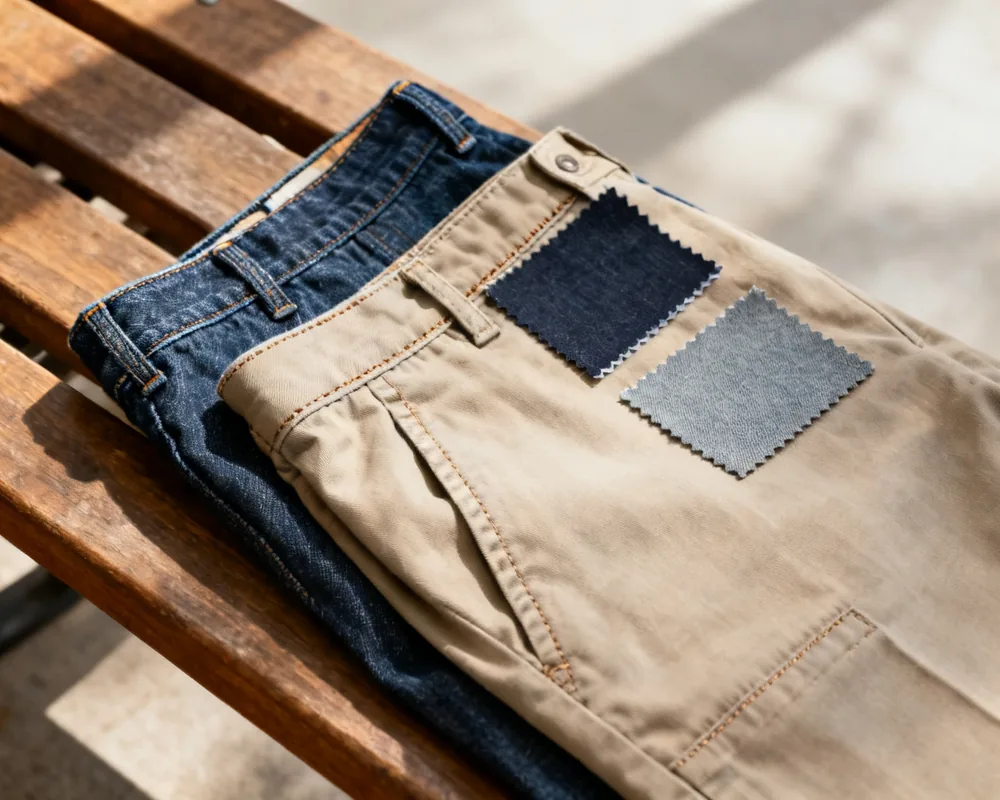
Seam slippage and tear questions belong with the stitch plan, not with a swatch photo alone.
Mass per unit area does not define twill, yarn count or finish. Two cloths near 340 g/m² can still differ in hand and shade. A 7 Ne warp and a 6 Ne weft are different yarns even when the GSM line looks close.
Send composition, weave construction, usable width and the garment. Add the shade reference and whether the finish is already on the cutting.
Compare results after method, specimen state and scope match. Abrasion resistance under ISO 12947 and colorfastness under ISO 105-C06 answer different questions. A rigid 100% cotton cloth is not ranked against a 2% elastane blend by one number.
Composition · weave construction · GSM · usable width · finish