Kaihara — A useful brief starts with the use
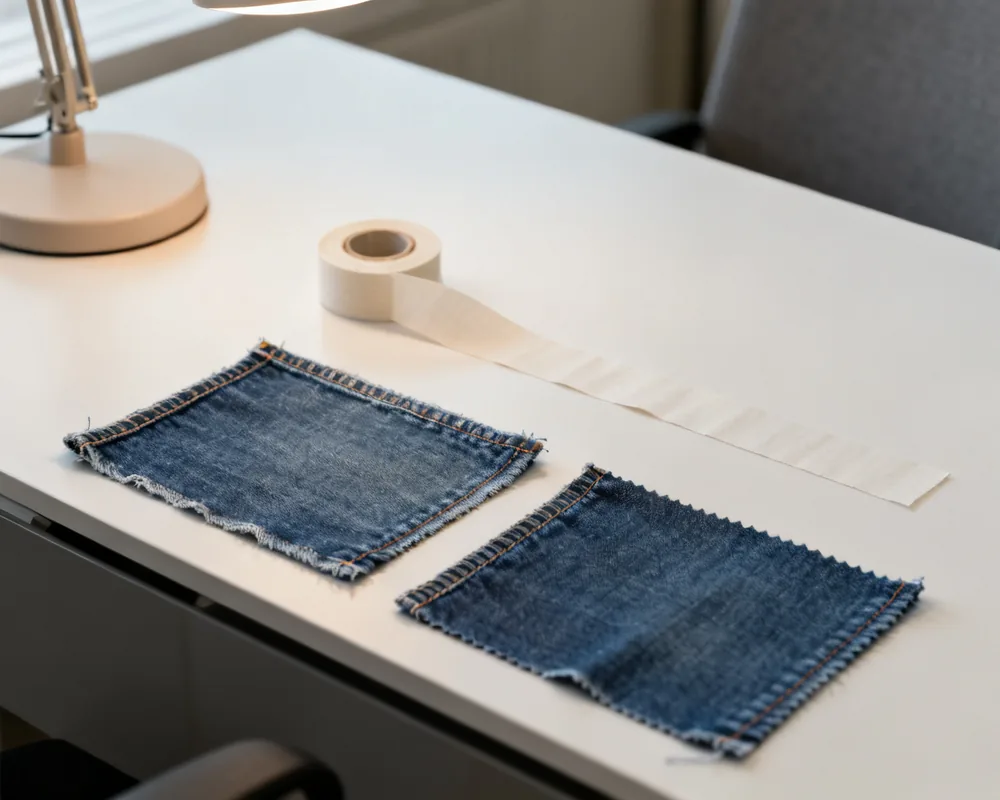
A sample reference, even a small selvedge cutting, makes the shade and the twill easier to review than a colour name alone.
Before you send
- Material reference
- Share a cutting or a construction description: fiber composition, weave, warp and weft if you know them, and whether the edge is selvedge. A worked example of a note is 100% cotton, 3/1 right-hand twill, 7 Ne warp and 6 Ne weft, with a selvedge edge. A photo can support the note. The hand still needs words. Those yarn counts are an example of how to write a brief, not a Kaihara construction claim.
- Application
- Explain the garment, the wash you expect, and how panels will be joined. Jeans, jackets and trousers do not share one seam story. If elastane is wanted for recovery, write it apart from the cotton share, for example 98% cotton and 2% elastane. A home-laundry brief might name one 40 °C cycle. That cycle is the buyer's care assumption, not a tested Kaihara claim.
- Order context
- State quantity and destination for discussion. Those lines do not set a minimum and they do not reserve cloth. Add GSM and usable width in centimetres when you have targets, such as 407 g/m² (12 oz/yd²) and 78 cm usable inside the selvedge, and mark unknowns as unknowns. A 500 m enquiry remains a discussion quantity.
- How to reach this desk
- The inquiry form is the contact route on this page. A street address, telephone number and opening hours are not published, so none are shown. Social accounts are not listed because none are verified here. Use the form for shade, width and finish questions. Ask for the usable width inside the selvedge when the garment panel is narrow.